

Driven Dreamer, Co-Founder and Global Editor-in-Chief of Refinery29
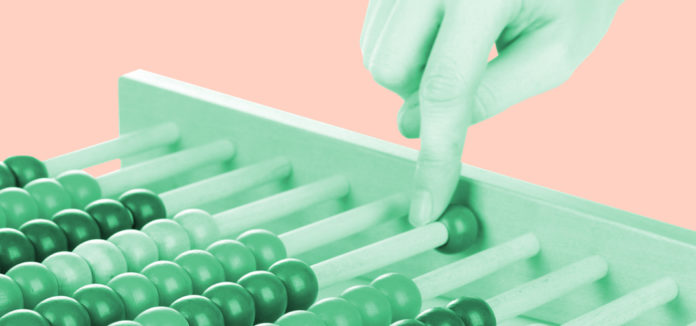
Question: If you were running a 26-mile marathon and you were running out of gas or starting to feel everything (not in a good way), are you more likely to keep going if you have two miles left or ten?
Here, the difference may lie not in the physiology of your muscles and how good your sneakers are, but in the psychology of numbers. Research shows that once we perceive a goal to be within reach, the more likely we are to persist. As described in one study:
The closer people are to the goal, the more resources they invest in reaching it.
Research shows people have more motivation when proximity to a goal is framed as a smaller number. For example, it may seem obvious that telling someone 20 percent of a task is complete is better than saying 80 percent of the task is left, but it is also a better motivator to say that there is 20 percent left rather than 80 percent left. This phenomenon is known as the Law of Small Numbers. As Paul Dolan writes in Happiness by Design:
The law of small numbers makes your commitment to progress more salient.
How we monitor our progress toward completing a goal directly influences motivation. This has implications for the real world. Explicit feedback on goal progress can make a difference in education, in the workplace, in marketing, and more. As the authors suggest:
Weight-loss programs should design their goal-progress feedback system to highlight small distances. Specifically, these programs should consider customers’ levels of progress and emphasize whichever is smaller: the weight people have already lost or how much they need to still lose…
Financial services could benefit from this too. They can develop programs or financial products that encourage consumer saving by providing feedback that emphasizes small areas of goal progress—either what has been saved to date or what remains to meet the goal.
Along similar lines, telling a student they have completed 20 percent of a book is more motivating than saying they have 80 percent more to read.
The good news is you have less than 1 percent of this article left to go!
I wish you all the best,
Dr. Samantha Boardman

For many women, the pursuit of looking good feels like an indulgence — and most of the time, in the bad kind of way. But we disagree. As Dr. Samantha Boardman discusses with Christene Barberich, global editor-in-chief and cofounder of Refinery29:
A piece of clothing can help you feel strong and beautiful, even on the worst day. I really think that [clothes are] a positive intervention for people.
If that’s a feel-good thought for you, it’s no accident. Dr. Boardman has built her career on focusing on the good stuff. Right here on Positive Prescription, we encourage people to consider that building on what’s already strong is just as important as fixing what’s wrong. “You might have a mental illness, you might have depression, you might have anxiety, but it doesn’t define you. It doesn’t necessarily have to be your identity,” Dr. Boardman tells Christene during the latest episode of UnStyled. Small gestures of self-care aren’t just fun, they’re necessary. How you take care of yourself, whether it’s picking out your outfit, applying a pretty shade of red lipstick, or going to the gym — those things are integral to your mental health.
Listen to it on:


We tend to divide the world into two types of people—neat freaks or slobs. We assume neat freaks are organized, goal oriented winners who get things done, get up early and make their beds with envelope-corner precision.
On the flip side, we think of slobs as disorganized, lazy slackers who lack motivation and self-discipline. In some cases, their morals are called into question.
Is there any truth to these assumptions? Perhaps a morsel. Studies do show how our surroundings influence behavior.
When researchers placed flyers on car windshields in two different kinds of parking lots – one pristine and clean, the other filled with litter – they found that test participants were more likely to throw the flyers on the ground in the litter-filled lot than the clean one. Meanwhile, those individuals in the clean lot maintained the cleanliness and threw the flyers away.
For another study, researchers divided participants into two groups. Half was sent to a tidy office, the other half was sent to a messy office. After the participants were asked to fill out forms for 10 minutes they were offered chocolate bars or apples on their way out. Those who had been in the orderly office were twice as likely to take the apple.
Both studies support the ‘Broken Window Theory’ – that even slight disorder or neglect can lead to poor choices and reduced self-discipline. In other words, chaos begets chaos.
If clean spaces spur healthy choices and responsible behavior, are messy spaces all bad? No. Disorderly environments have an upside.
When two groups of test participants were instructed to generate new uses for Ping Pong balls, the group in the cluttered environment came up with far more creative ideas than those in the tidy space.
People in a messy space are more likely to try new things and explore new solutions. They are unafraid to break free from tradition and feel less tethered to do things in a conventional way. People in clean spaces make healthier choices and adhere to social norms and traditions.
So if you need to think outside the box, a little disorder might go a long way.
I wish you all the best,
Dr. Samantha Boardman
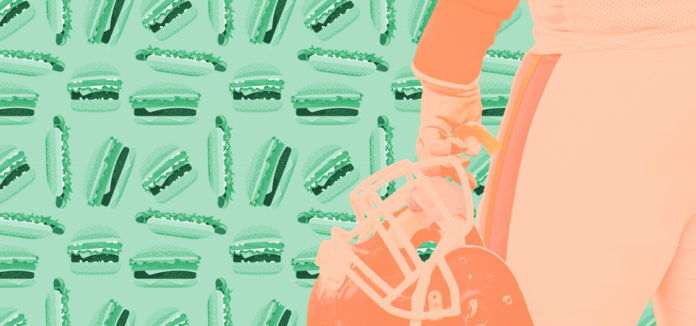
High-fat foods and watching football go hand in hand. Chicken wings, nachos, hotdogs followed by TUMS are all part of the experience. The influence of football on food consumption extends beyond the final score of the game. A study shows that the outcome of the game has a significant effect on what fans eat afterward. After researchers evaluated the saturated fat intake in a number of households during NFL seasons, they found that people not only ate more saturated fat after a loss, but that the preference for fatty foods was stronger in cities with wide fan bases or when the game had been particularly dramatic or close. This phenomenon is not uniquely American. French soccer fans showed a similar response. After a defeat, they gravitated towards unhealthy snacks.
The good news is that self-affirmation is an effective remedy. When fans of the losing team gave themselves affirmative support, they still ate the same amount, but of healthier food. After a loss, the researchers suggest reminding oneself of the bigger picture and trying to put things in perspective.
The takeaway? When you’re feeling beaten, the best thing to do is comfort yourself – but with words, not nachos and hotdogs.
I wish you all the best,
Dr. Samantha Boardman