I almost missed it. I was in a taxi on my way to the airport in the Bahamas, phone in hand, the familiar gravity of the scroll pulling at me. There were emails to check, headlines to skim, daily Duolingo lessons to complete (I’m on day 464 and my French score is 75 in case you’re wondering). But my battery was running low and the driver didn’t have a charger, so I put the phone away and a conversation unfolded.
The driver, a man who had spent his whole life on the island, walked me through 300 years of history. He talked about the current political situation, pointed out the public and private hospitals, explained what happened in the wake of Hurricane Dorian in 2019, and described how the country had rebuilt. By the time we reached the terminal, not only had I learned a great deal about the country, I felt that particular aliveness that comes from talking to and learning from another person. I honestly wished the drive had been longer.
I’ve been thinking about that taxi ride ever since. It reminded me of something we are quietly losing.
We have stopped talking to each other. Not entirely, not on purpose, but spontaneous conversations—the unplanned, unscripted ones that happen when there is nothing else to reach for—have become increasingly rare.
We have become terrified of saying the wrong thing
Scroll through any wellness account and you’ll find an endless parade of linguistic landmines. Never say “just calm down” to someone with anxiety. Don’t tell a person with depression to “look on the bright side.” Never ask a child with ADHD “why can’t you just focus?” Don’t say “this too shall pass” to someone who is grieving. The lists go on and on. What not to say to a new mom. What never to tell someone in recovery. We are warned that even when well-intended, these phrases are “more harmful than you think.”
Take enough of these warnings to heart and every conversation starts to feel like a potential violation. Every instinct to reach out gets filtered through a checklist with impossibly high standards. We are all walking on eggshells. Patients tell me regularly how afraid they are of saying the wrong thing.
And so, with the best of intentions, we go quiet. We don’t ask the widower how he’s doing, not because we don’t care, but because we’re worried about saying something that might upset him or be taken the wrong way. We hold back from calling the friend who didn’t get the promotion because we can’t find the words that feel “just right.”
We have lost our tolerance for the friction of real conversation
Real conversation is imperfect. It wanders. It can get uncomfortable. People disagree. Silences land awkwardly. Someone says something you find irritating, or confusing, or that requires you to respond when you’d rather not.
We have decided we don’t want any of that. We would rather get lost in our phones or walk away than deal with the discomfort.
As I wrote about recently, a researcher recently analyzed fifteen years of posts on Reddit’s r/relationship_advice, one of the largest relationship forums on the internet. Comments advising boundaries, therapy, and breakups have surged, while nearly every other kind of advice, telling people to communicate, compromise, and give each other space has declined. Someone posts about a difficult partner, a frustrating friendship, a family conflict, and the most upvoted response is almost always the same: leave. Cut them off. You don’t need that in your life.
But all relationships require friction to deepen. We get better at conversation by doing it, by tolerating awkward pauses, by learning how to repair the small ruptures that inevitably happen when two humans try to understand each other. Avoidance doesn’t protect us. It atrophies the very muscles we need to connect.
Our phones fill every silence
The average American picks up their phone nearly 200 times a day. We reach for it in elevators, in lines, at stoplights, at dinner tables, and in taxis (unless of course our battery is running low). We have become so practiced at filling dead space with the screen that we’ve forgotten what used to live there: conversation.
The silence between strangers was once an invitation. Now it’s a void we reflexively close with our devices. What we don’t realize is that those small openings, a wait at the pharmacy, a seat on a train, a ride to the airport, were where some of the richest encounters of daily life unfolded. Research by behavioral scientists Nicholas Epley and Juliana Schroeder found that commuters who talked to strangers reported significantly higher levels of wellbeing than those who stayed silent, even though the vast majority predicted the opposite would be true. We think we want to be left alone, that we will be happier if left to our own devices, on our devices. We’re wrong.
Conversations are rarely perfect. They are not a performance, nor should they be a minefield. A conversation, at its best, is simply two people deciding, against the pull of everything else, to be present for each other for a few minutes.
And when someone does say the wrong thing, when they fumble the words, ask the question they shouldn’t have, or offer the clumsy comfort that lands badly, try to meet them with generosity rather than withdrawal. They showed up. They tried. Give them some grace.
The Bottom Line
Put the phone away. Engage in conversation. Talk to people even when you don’t feel like it. Tolerate the discomfort of someone who is harder to love than you’d like. You might even learn something. As an old friend used to tell me: everyone knows something you don’t.
We live in a world that tells us the goal is to be larger than life. But what if we’re missing out on the invaluable experience of feeling small?
Four astronauts launched Wednesday evening from Kennedy Space Center, bound for the Moon. It is the first crewed mission beyond Earth’s orbit since 1972. In a few days, Reid Wiseman, Victor Glover, Christina Koch, and Jeremy Hansen will look back and see our planet the way almost no one ever has.
If history is any guide, it will change them.
The experience even has a name. The “Overview Effect” refers to the profound shift astronauts report when viewing Earth from outside its atmosphere, an overwhelming emotion and a sudden, visceral sense of identification with all of humanity. Astronaut Rusty Schweickart described it this way in his essay No Frames, No Boundaries, “You look down and see the surface of that globe you’ve lived on all this time, and you know all those people down there and they are like you, they are you and somehow you represent them.”
At the heart of this experience is awe, that remarkable feeling that briefly lifts us out of ourselves. Two things tend to happen when we encounter it: we feel diminished in the presence of something greater than ourselves, and we feel moved to be better to others. The Awe Experience Scale, developed by David Yaden, Dacher Keltner, and colleagues, captures it in plain language: I felt my sense of self shrink. I felt closely connected to humanity. I felt I was in the presence of something grand. I experienced something greater than myself. The self doesn’t disappear in these moments. It expands.
Awe has been part of human thought for a long time. Burke and Kant wrote about the sublime, experiences that exceed ordinary beauty and stop us cold. Darwin recognized wonder as a fundamental human emotion. William James brought these experiences into psychology in 1902, and Maslow later argued that the capacity for awe wasn’t mystical or rare but essential to a good life. The modern scientific study of it largely begins with a 2003 paper by Keltner and Haidt, who defined awe as what happens when we encounter something so vast we have to stretch our minds to take it in.
The Paradox of Smallness
We live in a culture relentlessly invested in bigness. Build your brand. Maximize your platform. Optimize your presence. Be seen. The pressure to perform, to grow, to flex on social media, at work, and in the quiet social competition of daily life is exhausting and unrelenting.
The Overview Effect offers a different kind of wisdom. It is a reminder that what actually produces meaning, connection, and well-being is not magnitude but perspective. As astronaut Ed Gibson put it: “You see how diminutive your life and concerns are compared to other things in the universe. Your life and concerns are important to you, of course. But you can see that a lot of the things you worry about do not make much difference in an overall sense. The result is that you enjoy the life that is before you… it allows you to have inner peace.”
Put simply, the small self may help us be our best self.
Find Your Own Overview Effect
Few of us will ever leave the atmosphere, but the feeling those astronauts are describing is closer than we think. Here are five simple ways to start:
Take an awe walk
Dacher Keltner’s research found that just 15 minutes of walking with intentional curiosity, really looking and noticing what is larger than you, significantly improved emotional well-being. The instruction is simple: widen your gaze, look outward rather than inward, and notice what is larger than you.
Look up
Literally. A clear night sky remains one of the most reliable awe inducers available to anyone, anywhere. There are an estimated two trillion galaxies in the observable universe. The light reaching your eyes from some of those stars left its source before humans existed.
Seek beauty
Astronauts’ accounts of the Overview Effect are full of descriptions of beauty including the colors of the ocean, the impossible blue of the atmosphere, the curve of the Earth at the horizon. We tend to wait for beauty to find us. It works better the other way around.
Volunteer and serve
Astronauts consistently return from space with what Edgar Mitchell called “a compulsion to do something.” Directing attention away from yourself and toward another person’s need produces many of the same benefits as awe: reduced self-focus, a sense of connection, meaning that outlasts the moment.
Practice quiet
At its core, the Overview Effect happens when the noise stops. When there is nothing to perform, no metrics to hit, no audience to play to. A walk without a podcast, a moment of genuine stillness, a pause long enough to actually notice where you are.
Bottom Line
What those four astronauts are feeling is not reserved for those with the right stuff. It is available for anyone willing to pay attention.
Something strange is happening at concerts and clubs: people have stopped dancing. The Wall Street Journal recently reported on this phenomenon. DJs and venue owners are baffled as crowds stand rigid, phones raised, too self-conscious to move. Even Austin Butler was recently spotted awkwardly hovering by a DJ booth at a party, too nervous to dance.
The reality is that the fear of being in the spotlight is almost entirely in your head.
The Vanilla Ice Experiment
In 2000, Cornell psychologist Thomas Gilovich ran a brilliantly simple experiment. He asked college students to wear embarrassing T-shirts–one featured Vanilla Ice and another featured Barry Manilow (apologies to fans, Vanilla Ice and Manilow were considered highly uncool at the time) and walk into a room full of observers.
Before entering, participants predicted about half the room would take note of their cringe inducing shirt.
The actual number? 23%.
They overestimated by more than double.
Gilovich called this the “spotlight effect”—our stubborn belief that we’re center stage when really, everyone else is just as worried about themselves. We tend to fixate on our own vivid experience and forget a crucial truth: they’re not watching you because they’re preoccupied with their own thoughts.
Why Social Media Made It Worse (But Not How You Think)
Social media didn’t create the spotlight effect. It amplified it. The possibility of being captured on camera transforms that imaginary spotlight into something that feels real.
Except it’s still mostly imaginary.
Yes, your friend might post a photo. But even if your awkward dance moves make it into frame, here’s what happens: almost nothing. The average Instagram post gets 3-5% engagement. That blurry shot of you? People scroll past in 1.3 seconds while thinking about their own problems.
The Science of Breaking the Spell
Here’s where it gets interesting: one person dancing changes everything.
Solomon Asch’s famous conformity studies found that when everyone stays still, people conform. But introduce just one person who breaks the pattern? Conformity drops by 80%.
You’re not just liberating yourself when you start dancing. You’re giving permission to everyone around you.
People actually stick with dancing because it’s enjoyable. Try getting those adherence rates from a treadmill.
So when you stand frozen at the edge of the floor, you’re forfeiting measurable improvements to your mental health, cognitive function, and well-being. All because of an audience that doesn’t exist.
Three Moves That Work
The spotlight effect may be stubborn, but it’s not unbeatable. Decades of research point to simple ways to loosen its grip. Here are three evidence-based moves to reclaim the dance floor.
1. Cut your estimate in half. Then cut it again.
The person next to you isn’t analyzing your moves. They’re worried about their own.
2. Be the first.
Go ahead and break the seal. Five minutes later when the floor is packed, no one will remember who started it. (And if they do, they’ll think you were brave.)
3. Put your phone away.
You can’t lose yourself in the music while filming for an imaginary audience. Choose one: live it or record it.
Whatever You Do, Don’t Take Yourself Too Seriously
A brand new study found that when we commit minor social blunders such as tripping on a curb, spilling a drink, or yes, busting out an awkward dance move, that laughter makes you look better than cringing with embarrassment. Across six studies with over 3,000 participants, people who laughed at their harmless mistakes were seen as warmer, more competent, and more authentic than those who were mortified.
Embarrassment signals that you believe everyone noticed and that it matters. We already know from Gilovich’s research that people notice far less than you think. Laughter signals something different, that you recognize the mistake is trivial and that you’re not taking yourself too seriously.
So when you inevitably stumble on the dance floor, your best response isn’t to freeze or flee in mortification. Laugh. Keep moving. You’ve just combined two powerful insights: the spotlight effect means most people didn’t notice anyway, and for those few who did, your laughter just made you more likable.
The Bottom Line
Unless you’re Taylor Swift or Austin Butler, nobody cares about your dance moves. And I mean that in the most generous and liberating way possible.
You are blissfully, wonderfully forgettable to 99.9% of people around you. This isn’t an insult, think of it as freedom.
The research is clear: we overestimate attention by more than double, one person can change group behavior by 80%, and dancing delivers measurable health benefits. The only thing standing between you and the dance floor is a phantom audience that exists mostly in your head.
And here’s the thing: if you’re holding back on the dance floor, where else are you holding back? That question you didn’t ask in the meeting. The pitch you didn’t make. The conversation you didn’t start. The spotlight effect doesn’t just keep us from dancing, it keeps us from speaking up, trying new things, and taking the very risks that make life interesting. Once the imaginary spotlight dims, the real possibilities come into focus.
People keep asking me about “Rejection Sensitive Dysphoria” or RSD. They’re convinced that they or someone they know has it. The term describes emotional pain triggered by perceived or actual rejection, criticism, or failure, and there are plenty of descriptions and self-assessments available online.
According to these sources, you might have RSD if:
You have a hard time taking suggestions from others, even when they’re constructive
You’re defensive when you feel criticized
You’ve been told you’re “too sensitive” frequently
You experience anxiety in social situations, overthinking, and rumination
Here’s the thing: many people I know don’t like criticism, tend to overthink, and find social situations anxiety-provoking. I would argue that these experiences go hand in hand with being human. Some of the finest people I know are extremely sensitive. For the most part, I see this as a strength, not as an illness requiring an intervention.
It’s worth noting that RSD is not recognized in the DSM-5, meaning it has no formal diagnostic criteria. I never studied it in medical school or heard about it during my training to become a psychiatrist. The term was first popularized in 2010 by Dr. William Dodson, who studies ADHD, to describe a phenomenon he observed in his patients. While some people with ADHD identify with features of RSD, that doesn’t make it a disorder.
We’re told that if someone you love has RSD, you should offer non-judgmental reassurance, avoid conflict, validate their emotions, and withhold criticism. When communicating with them, we’re advised to ask if they’re feeling uncomfortable and do our best to ensure they feel supported and heard.
But here’s what troubles me: while I don’t deny that some people experience pain in the face of rejection and criticism, the label RSD is being used to pathologize normal human experiences of disappointment, as an excuse to avoid discomfort, and as a reason to stop trying.
The Problem with Calling It a Disorder
When we label intense reactions to rejection as a “disorder,” we risk creating an excuse for avoidance. The language of disorder becomes a permission slip to opt out—to not apply for the job, to not ask someone out, to not put your work out into the world. It transforms what could be a challenge to work through into an immutable condition to accommodate. And that’s dangerous, because avoidance is exactly what makes rejection sensitivity worse, not better.
This fear of making a misstep is fueled by an epidemic of perfectionism. We’ve somehow convinced ourselves that every rejection or setback is a sign of failure rather than evidence of trying.
Thankfully, role models like Lindsey Vonn remind us that trying matters more than winning. As she recently wrote on Instagram after announcing her retirement from competitive skiing:
“And sometimes we fall. Sometimes our hearts are broken. Sometimes we don’t achieve the dreams we know we could have. But that is also the beauty of life; we can try. I tried. I dreamt. I jumped. I hope if you take away anything from my journey it’s that you all have the courage to dare greatly. Life is too short not to take chances on yourself. Because the only failure in life is not trying.”
Instead of avoiding rejection, we should allow for it. Instead of fearing failure, normalize it. Instead of minimizing discomfort, lean into it. Instead of striving for perfection, embrace effort. Living fully is about fully trying.
Three Ways to Be Less Rejection Sensitive
1. Make a “No” Spreadsheet
A countertrend is emerging, particularly among entrepreneurs and job seekers who are openly sharing their rejection tallies on social media. People are posting screenshots of declined job applications, publishing essays about pitches that went nowhere, and creating actual spreadsheets documenting every “no” they’ve received. What started as a way to cope with the brutal realities of job hunting and startup fundraising has evolved into a badge of honor—proof that you’re putting yourself out there rather than playing it safe.
The rejection spreadsheet is a simple practice of tallying every “no” you receive as a marker of effort and courage. Job applications rejected? Mark it down. Pitch declined? Add it to the list. Social invitation that went nowhere? Count it.
The rejection spreadsheet reframes setbacks from shameful secrets into data points. It’s an invitation to put ourselves out there and reframes failure as part of a process. When you’re actively collecting rejections, each “no” becomes proof that you’re in the game, not evidence that you should retreat from it.
Speaking of collecting failures, Sweden recently opened a Museum of Personal Failure where visitors can share their own setbacks and see others’ stories of defeat displayed alongside their eventual triumphs. The museum’s mission? To normalize failure as an essential part of the human experience.
This practice builds failure into the learning process itself. Disappointment and frustration stop being aberrations and become expected parts of growth. Perfectionism loses its grip when you’re documenting your mistakes rather than hiding them.
As Seelig puts it: “If you want more successes, you are going to have to tolerate more failure along the way.”
The failure resume puts challenges into perspective. When seen through the lens of progress and learning rather than judgment and shame, setbacks become less psychologically threatening. You’re not failing; you’re collecting evidence of effort.
3. Develop Failure Immunity
Russell Shaw, writing in The Atlantic, draws a compelling analogy from immunology. He calls it “failure immunity”—the psychological antibodies that allow people to face future disappointments without falling apart.
For years, pediatricians told parents to avoid exposing children to peanuts during infancy, believing this would protect them from allergic reactions. But this advice coincided with a spike in severe peanut allergies. When the guidance was reversed in 2017, peanut allergies meaningfully declined. Scientists now understand that early exposure helps the body learn that the allergen is harmless, just as encountering a weakened virus through vaccination teaches the immune system to produce protective antibodies.
Failure works similarly. We need exposure to manageable setbacks to develop the capacity to handle future disappointments. As Shaw notes, developmental psychologist Ann S. Masten describes resilience as “ordinary magic”—not extraordinary personal qualities, but the result of normal developmental processes. Those processes require practice at encountering obstacles and pushing through them. You can’t develop perseverance if you’ve never had to persevere.
There’s even a formalized approach called Rejection Therapy, where people deliberately court rejection—asking strangers for improbable favors, pitching outlandish ideas, requesting unreasonable discounts. The goal isn’t to succeed. It’s to experience rejection so frequently that it loses its sting. This is the opposite of avoidance, which is how anxiety maintains its power.
What We’re Teaching Our Children
Shaw describes a mother concerned about her daughter’s first-ever B in calculus. When Shaw suggested the experience of not being perfect might benefit her daughter, the mother looked at him “as if I had suggested her child take up base jumping.”
This captures what Shaw calls “a paradox of contemporary parenting: In trying to protect their children from any hint of failure, many parents risk making them more fragile.”
The consequences show up in children’s mental health. When children absorb the message that failure is catastrophic, even minor mistakes feel unbearable. This is what happens when we deny young people the opportunity to develop failure immunity—they don’t learn that disappointment is survivable, that mistakes are instructive, and that setbacks are temporary.
The research is clear: when parents focus exclusively on outcomes (winning, rankings, being the best), children develop fragile self-worth tied to performance. But when parents emphasize process over outcome—effort, strategy, learning, resilience—children develop a growth mindset. Children whose parents ask “Did you try your best?” and “What did you learn?” develop healthier relationships with achievement (and failure) than those whose parents ask “Did you win?” and “Did you get an A?”
Shaw’s guidance: resist the urge to rescue. When a child struggles with homework, providing answers sends the message “You can’t handle this.” He shares the story of his daughter who regularly lost sleep over English papers in high school, weeping over drafts she’d toss out. As painful as it was to watch, he resisted stepping in. She recently reflected on how much easier college writing has been because of how she “tortured” herself learning in high school.
Parents can also normalize failure by treating mistakes not as shameful secrets but as integral to our stories. Research on social learning theory by psychologist Albert Bandura shows that children develop coping strategies by observing how their parents respond to adversity.
Make Feedback Your Love Language
I recently attended a book party for Jennifer Wallace, author of the best-selling Mattering. She thanked the people who had read the first few drafts of the book and expressed gratitude for their sometimes harsh criticism. “Critical feedback is my love language,” she said. Perhaps the most radical shift isn’t just tolerating rejection, it’s actively seeking critical advice and learning to value it as deeply as praise.
In a culture obsessed with affirmation, making constructive criticism your “love language” means training yourself to hear “here’s what you could improve” as an act of care rather than an attack. It means recognizing that people who tell you hard truths are giving you something more valuable than people who only offer empty praise.
The best coaches, mentors, and colleagues aren’t the ones who make you feel good in the moment. They’re the ones who care enough to tell you what you need to hear. When someone takes the time to give you detailed, thoughtful advice, they’re investing in your growth. When they point out your blind spots, they’re offering you a gift most people never receive.
Learning to genuinely appreciate criticism requires reframing. Instead of thinking “They’re saying I’m not good enough,” try “They believe I’m capable of being even better.” Instead of “This feedback means I failed,” try “This feedback means someone cares enough to help me improve.”
The most successful people aren’t those who avoid criticism. They’re the ones who actively solicit it, who ask “What could I have done better?” after every presentation, who seek out the colleagues most likely to be brutally honest. They’ve learned that growth lives in the gap between where you are and where you could be. Advice will help you navigate this.
A Legacy of Trying, Not Winning
At a cultural moment when we’re encouraged to see ordinary disappointments as disorders and when perfectionistic standards are crushing people’s willingness to try, seeking and normalizing rejection is a healthier approach.
The rejection spreadsheet and failure resume aren’t about lowering standards or celebrating mediocrity. They’re about recognizing that meaningful achievement requires repeated failure. Everyone who has achieved something meaningful has a longer history of losses than wins. The difference is they didn’t stop after the defeats.
As Shaw writes, “The kid who gets straight A’s through high school may struggle more in college than the one who foundered in ninth grade, figured out what went wrong, and then kept going.” When we allow ourselves and our children the satisfaction of overcoming hurdles on our own, we develop something more powerful than a perfect transcript: confidence in our ability to recover and come back stronger.
Resilience isn’t innate. It’s built through exposure to manageable challenges and learning that we can handle more than we think. When we avoid rejection, we rob ourselves of the chance to discover our own durability. When we protect our children from every disappointment, we prevent them from building the psychological muscle they’ll need for a full life.
So start your spreadsheet. Build your failure resume. Make rejection a goal rather than a fear. Seek out the feedback others are too afraid to hear. Teach your children that setbacks are worth celebrating and that trying means you were brave enough to compete. Let them develop their failure immunity through manageable exposure to disappointments.
You might be surprised to discover that the pursuit of “yes” becomes a lot easier when you stop being terrified of “no.” That the people who challenge you care more than the people who only compliment you. And that real success isn’t perfection—it’s the willingness to keep showing up, keep learning, and keep growing, even when it’s uncomfortable.
As Lindsey Vonn reminds us: the only failure in life is not trying.
Valentine’s Day will arrive soon with its familiar rituals: flowers, chocolates, and heart-shaped everything. These visible gestures of affection have their place but what about the role of invisible acts of love in everyday life? Put simply, how much do the little things matter?
A lot, according to research.
It turns out that little acts of love like the text you send to check in during their stressful afternoon, the way you handle the dishes without being asked, how you remember to grab their prescription on your way home, fill the car up with gas, or simply choosing not to argue about something small because you know they’ve had a hard day are the bedrock of a solid relationship. Acts so ordinary they might blend into the background, but they’re invaluable.
Invisible Doesn’t Mean Inconsequential
Most of us assume that acts of kindness only matter if the recipient knows about it. No recognition, no reward.
It turns out, we’re wrong. Just because nobody heard the tree fall doesn’t mean it didn’t make a sound.
Research from the University of Rochester found that the emotional benefits of giving are strong for the giver, whether or not the recipient even notices the act. In fact, when psychologists Harry Reis, Ronald Rogge, and Michael Maniaci studied 175 newlywed couples over two weeks, they discovered that givers experienced benefits about 45 percent greater than recipients and this held true regardless of whether their kind gestures were recognized.
The researchers asked couples to track daily instances when one spouse set aside personal wishes to meet their partner’s needs: things like changing plans for their sake, doing something that showed they were valued, expressing kindness. They also monitored each person’s emotional state throughout the day using scales that measured feelings ranging from enthusiastic and happy to sad and hurt.
Before the study, the team expected the biggest emotional boost for givers would come when their partner noticed and appreciated the kind act. They assumed that recognition would make them feel valued. That prediction proved true, but only partially.
What they didn’t expect: givers benefited emotionally from compassionate acts even when their partner remained completely unaware. Of course, the recipient needed to notice the kindness to experience its benefits. But the person performing the act? Their wellbeing improved by simply doing something kind.
As the Dalai Lama believes and this research confirms: doing something for someone else enhances our own emotional state. The act itself is the reward.
When we act compassionately, putting someone else’s needs ahead of our own, we create psychological coherence. Our actions match our beliefs about what matters. That internal alignment is what generates the emotional benefit, not whether anyone notices.
The Emotional Return on Generosity
Every day offers dozens of small opportunities such as making coffee for your partner, listening fully when they need to talk, handling an errand they forgot, letting go of being right in a minor disagreement. We’ve been conditioned to think these acts only “count” if noticed and appreciated. The husbands and wives in the study reported performing compassionate acts an average of .65 times per day. These weren’t grand gestures, just everyday moments of considering their partner’s needs.
Image: Tom Toro
Beyond Keeping Score
In an era obsessed with reciprocity and fairness, this research is a reminder that you don’t need your partner to always match your efforts, notice your sacrifices, or validate your contributions for those actions to matter. The emotional returns are built into the act itself.
This isn’t permission for relationships to become one-sided. Mutual care and reciprocity still matter for relationship quality and longevity. But on a day-to-day basis, your well-being doesn’t depend on your partner (or you) keeping score or even noticing.
Bottom Line: Stop waiting for the right conditions to be generous. Don’t hold back compassion until you’re sure it will be appreciated. The emotional benefit is yours either way.
Which brings us back to Valentine’s Day. By all means, enjoy the roses and the chocolates (Aby if you’re reading this, I love Läderach) but remember that the real work of love happens in the unmarked moments in everyday life. The coffee made without being asked. The listening without fixing. The thousand invisible acts of considering someone else. Each one is strengthening your emotional well-being, building your capacity for connection, and making you the kind of partner you want to be.
I have a January birthday so aging is on my mind. There is a lot of advice out there about how to live long and well. Following a Mediterranean diet, regular exercise, and socializing are all well-established contributors to healthy aging and longevity. Snooze. This is not exactly breaking news. We have all heard this before.
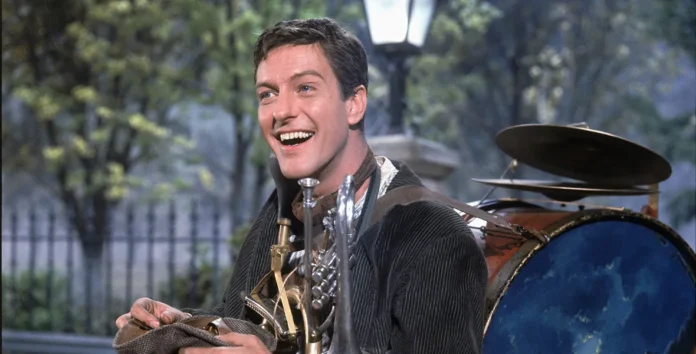
I recently stumbled upon a lesser-known nugget of wisdom about positive aging from Dick Van Dyke, the legendary song-and-dance man from Mary Poppins and The Dick Van Dyke Show who celebrated his 100th birthday on December 13th. He attributes his longevity to a simple strategy.
“I never really was able to work up a feeling of hate. There were things I didn’t like, people I don’t like and disapprove of. But I never really was able to do a white heat kind of hate.”
It’s a remarkable admission from someone who has made it through a full century of reasons to be angry. He’s lived through wars, social upheaval, and his own twenty-five-year battle with alcoholism. Yet somehow, he never tumbled into that toxic vat of a “white heat kind of hate.”
Science backs him up. Research shows that recurrent episodes of anger can impair blood vessel function and heighten inflammation in the body, raising markers like IL-6 that accelerate aging. Chronic hostility functions like a physiological tax, straining the systems that keep us resilient. But Van Dyke’s insight goes deeper than physiology. What he’s describing is a kind of emotional discipline, not suppressing feelings, but refusing to let them calcify into the corrosive resentment that, as he says, eats you up from the inside.
In our current moment, we’re constantly fed reasons to be outraged—algorithms designed to trigger anger, news cycles built on conflict, social media engineered for fury. Van Dyke’s wisdom suggests that resisting this pull, making the conscious decision not to let anger harden into hate, might be one of the most important choices we make for our health and our lives.
Van Dyke’s insight reminds me of the three questions Buddhist teacher Jack Kornfield says people ask at the end of their lives: Did I love well? Did I live fully? Did I learn to let go? At any stage of our lives, these questions have a clarifying power and reorient us to what matters most: connection, engagement, and the ability to let things go (and not hate).
Did I love well?
This isn’t just about romantic love, though that counts. It’s about whether we let ourselves love the people around us, family, friends, community, even strangers. It’s about whether we treat people with kindness and show up when it matters.
Did I live fully?
This question challenges us to look at whether we actually engage with life or just watch it pass by. Do we say yes to experiences? Do we pursue what matters to us? Do we let ourselves feel things deeply? Kornfield suggests we ask ourselves whether we’re following a path with heart, not the path that looks good on paper or makes sense to other people, but the one that feels alive to us. Living fully doesn’t mean being reckless or chasing every impulse. It means being present to our own lives, awake to experience, willing to show up even when things are hard or uncertain.
Did I learn to let go?
This might be the hardest question, especially now when we’re surrounded by so much to rage against. But learning to let go means refusing to let that rage consume us. It means releasing our grip on how things should be, on past hurts, on the need to be right. It means we can disapprove, we can work for change, we can feel frustrated but we don’t let those feelings calcify into the kind of resentment that corrodes us from within.
What strikes me most about these three questions is how they reframe what matters as we age.
Having just had a birthday, I have been thinking a lot about these questions. We spend so much energy worrying about decline, about what we’re losing, about how things used to be or should be. Kornfield’s questions redirect us to what matters. They’re not about what we’ve achieved or accumulated. They’re about the quality of our presence, the generosity of our hearts, and our willingness to release what we cannot keep.
This year, I am doing my best to answer these questions with action. I spent my birthday at Citymeals on Wheels with family and friends, packing more than 1,550 meals for homebound older New Yorkers. Along with nourishment, the goal is to deliver connection, care, and dignity. Citymeals has always been about more than a meal.
There may be countless reasons to feel rage right now but I’ve learned that it’s hard to hold onto resentment when your hands are busy packing meals for someone else.
As Van Dyke reminds us, positive aging is about letting go and moving forward.