
Question Everything

Half of what we are going to teach you is wrong, and half of it is right. Our problem is that we don’t know which half is which.

Dr. Sidney Burwell, the dean of Harvard Medical School from 1935-1949, had these thought-provoking, wise words for incoming medical students.

Dr. Burwell’s statement was 100 percent true then. (And it still is today.) Consider the practice of “bloodletting,” once considered an excellent treatment for most ailments. A well-meaning 18th  Century physician sings its praises:

(Bloodletting) clears the mind, strengthens the memory, cleanses the stomach, dries up the brain, warms the marrow, sharpens the hearing, stops tears, encourages discrimination, develops the senses, promotes digestions, produces a musical voice, dispels torpor, drives away anxiety, feeds the blood, rids it of poisonous matter, and brings long life.

Sounds like quaint hooey today. But it was hardcore science then. And it’s not the only example of a “fact” that turned out not to be true. I bet anyone who watches The Knick — warning: spoiler alert! — has Googled whether cocaine was really used as an anesthetic or if pulling teeth was a treatment for insanity. Both bizarrely true.

Indeed, science is a moving target. A lot of what I learned in medical school is now being challenged. Cholesterol may not be as unhealthy as was once thought. A new report by a government advisory committee describes it as, “not a nutrient of concern for overconsumption.” Feeding peanuts to infants is no longer linked with food allergies. In fact, top researchers now believe it may prevent food allergies. Diet foods and soft drinks are no longer recommended to those trying to lose weight. Mounting evidence suggests artificial sweeteners may actually contribute to weight gain. New data emerges all the time.

Why are we so surprised when scientific “facts” are upended? Why does an unshakable faith in modern science persist when these “facts” keep changing?

Medical knowledge, like most knowledge, is a moving target. This is a good thing. I think of it as progress. It reminds us to keep asking questions and to challenge notions of truth about ourselves and the world we live in.

Deciding what is true and who to trust has become increasingly complicated. Developmental psychologist Howard Gardner suggests it is time to:

go beyond the notion that there’s a fixed body of truths located in books or especially in Wikipedia entries, and focus instead on when somebody makes a statement, on what basis did they make that statement, and what was the evidence?

Gardner continues:

There isn’t a single truth, but rather there are truths in different fields, and we have to learn how people in those fields make truth judgments.

The key is to keep an open mind and to keep learning throughout life.

Being open to new perspectives, an ability to change past perceptions, and an understanding of one’s own prejudices and biases are other keys to parsing the truth, said Gardner. One should also be prepared to think about things in entirely new ways.

This is an important 21st Century skill. Taking a step back, to gain perspective, to re-think goals and to reflect on values, is essential. Lifelong learners never stop asking questions and challenging what they think they know. They are forever mentors and mentees.

No matter what their age is, they have a “beginner’s mind” like Alfred J. Stunker, a pioneer of obesity research. Throughout his career and as he aged, his learning curve never plateaued.

Stephen Hawking is another example of someone who refuses to accept established truths and who relentlessly questions theories, including his own:

The greatest enemy of knowledge is not ignorance, it is the illusion of knowledge.

The ability to change and to adapt in a changing world is essential. Howard Gardner offers some sound advice:

We have to update, just like a good computer file. If you are thinking the same way that you did 50 years ago, that’s not good.

And this isn’t just about science and medicine, of course, but in all aspects of making our lives richer, fuller and more truthful.

I wish you all the best,

Dr. Samantha Boardman

SPANX WANTS YOU TO MULTITASK

Can you walk and chew gum at the same time? Lyndon Johnson is credited for creating this idiom during an interview talking about Gerald Ford. It is worth noting that Johnson reportedly said, “He can’t fart and chew gum at the same time.” In the interest of decency, the press chose a more PG version of Johnson’s remark!

Johnson was referring to Ford’s clumsiness but these days the saying has taken on a different meaning: the ability to multitask. You are aware of the the toll multitasking takes on productivity. Today I am going to focus on the toll multitasking takes on your waistline.

An estimated 66% of Americans watch TV while eating dinner, and 65% eat lunch while working at their desks. Twenty percent of meals are eaten in the car. What else do people do while eating?  Walk, ride the subway, talk on the phone, read a magazine or book, put on makeup and walk the dog are common responses. In the spirit of remaining PG, I will refrain from mentioning some of the others.

Whatever you do while eating, beware of your next bite. Not paying attention to your food may be making you fat. Distracted eating leads to mindless eating.

A study explored the effect of multitasking on food consumption and food flavor. The findings: taste perception is limited by our capacity to pay attention to multiple things at once. When you are not focused on what you are eating, it doesn’t taste as good, you crave stronger flavors (please pass the salt), and you miss the satiety cues your body is trying to send you that you are full.

This study goes hand in hand with research about how surroundings influence the experience of a meal. Ambience, lighting, and sound can make a good meal taste even better.  The reverse is true too—a noisy, ugly, overly bright room will take away from the flavor and experience of the food.

A famous restaurant in Paris, Dans Le Noir, serves dinner in total darkness. The idea is that visual sensory deprivation enhances the flavor and taste of every bite. It is the very opposite of multi-tasking while eating. The singular focus is on the food and by most accounts it is a sublime experience.

You don’t have to go to Paris to eat mindfully. Harvard’s health blog offers some helpful tips:

Try eating with your non-dominant hand; if you’re a righty, hold your fork in your left hand when lifting food to your mouth.

Use chopsticks if you don’t normally use them.

Eat silently for five minutes, thinking about what it took to produce that meal, from the sun’s rays to the farmer to the grocer to the cook.

Take small bites and chew well.

Before opening the fridge or cabinet, take a breath and ask yourself, “Am I really hungry?” Do something else, like reading or going on a short walk.

The bottom line: When it’s time to eat, it’s time to eat. Turn off the computer, the iPhone and the TV. Sit down at a table, put a napkin in your lap and savor every bite. Not only will the food taste better, you’ll eat less.

I wish you all the best,

Dr. Samantha Boardman
Should You Lie About Why You Are Late?

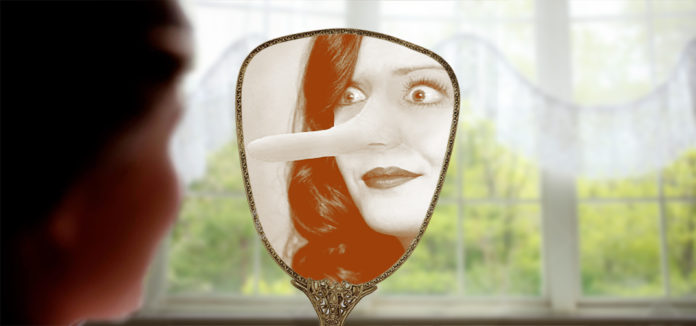
Like all parents, I tell my children that they must always tell the truth. “So why do I have to write a thank you letter to Grandma saying how much I love that set of monogrammed towels she gave me?” asks my ten-year-old son. “Can’t I say would have preferred a video game? It’s the truth.”

Leave it to a child to expose my hypocrisy. I fear the day he will interrogate me about Santa Claus and the Tooth Fairy.

The truth is, telling lies, even white lies, takes a toll on mental and physical health.  Frequent liars have increased stress, headaches, colds, back pain, insomnia and are more likely to be overweight than those who tell the truth. Lying is thought to trigger the release of stress hormones, leading to increased blood pressure and heart rate, among other stress responses that build up over the years.

The good news is that by telling the truth more often we can reverse this trend. A study showed that when participants purposefully reduced the amount of everyday lies they told they reported significant improvement in physical and mental health and better personal relationships. Just telling three fewer white lies a week made a difference.

Next time you are tempted to fudge the truth or spin an alternative fact about why you are late or forgot to return an email, consider telling the truth instead.

That said, as I tried to explain to my son, there are occasions when telling a white lie may be worth it, especially when it comes to sparing other people’s feelings.  He wrote a thank-you note saying how much he loved those monogrammed towels and also added a kernel of truth: “Now that I have a life time supply of beautiful towels, perhaps you will consider a video game next time.”

If you tell the truth, you don’t have to remember anything.

~Mark Twain

I wish you all the best,

Dr. Samantha Boardman

Keith Law

Father, Writer, Dilettante.

SMOOTH TALKERS, LISTEN UP

“Speak up,” adults tell their children. From an early age, we’re taught the importance of saying what we think loudly and clearly. The lesson is, if you want to make a point, your voice needs to be heard.

Less focused upon and arguably far more important is learning how to listen….really listen.

Genuine listeners have a quite power and charisma. People gravitate towards them. As Dr. Karl Menninger observed:

Listening is a magnetic thing, a strange and creative force. The people who listen to us are the ones we move toward. When we are listened to, it makes us unfold and expand.

New research highlights why being a good listener may be more advantageous than being a smooth talker. According to a recent study, good listening skills have a bigger impact on influencing others than verbal communication.  In other words, if you want to persuade someone of something, say less and listen more.

Here are four ways to hone your listening skills:

Active Listening

Paraphrase, clarify and offer feedback on what your conversation partner just said to you. And that doesn’t mean “uh-huh” or “yeah” or “I get it,” which are code for “I wasn’t totally listening.” The key to active listening it to let the other person know you’re engaged. Paraphrasing let’s them know you’re absorbing what they’re saying. Asking for clarification offers them an opportunity to get their message across as clearly as possible. And non-judgmental feedback shows them you care.

Empathetic Listening

Listening is more than just registering words. Search for the other person’s thoughts and feelings, the subtext, to truly understand what they’re saying.

Open Communication

Try to not interrupt the other person and let them finish each and every statement. If it’s required, let yourself be vulnerable to the other person’s message. It will ensure the conversation is one that’s open, honest and productive.

Total Listening

Consistent eye contact and positive body language sends the message that you’re really hearing them. Staying away from distractions and keeping distractions away — your vibrating cellphone, the TV flickering across the other room, the bit of lint you noticed on your sweater — let’s them know that what they’re saying is important to you, you’re engrossed and you care.

A recent Harvard Business Review article sums it up best:

While many of us have thought of being a good listener being like a sponge that accurately absorbs what the other person is saying, instead, what these findings show is that good listeners are like trampolines. They are someone you can bounce ideas off of — and rather than absorbing your ideas and energy, they amplify, energize, and clarify your thinking. They make you feel better not merely passively absorbing, but by actively supporting. This lets you gain energy and height, just like someone jumping on a trampoline.

Bounce Away.

I wish you all the best,

Dr. Samantha Boardman

TAKE 5: NOT JUST A JAZZ STANDARD — A LIFE STANDARD

Karen Warner, is Chief Executive and Managing Partner of Tangible Group, which offers consulting and coaching services to Fortune 1000 companies to improve performance and leadership. She shared a popular activity she leads in her workshops, and true to her generous spirit, she is sharing it with us at Positive Prescription.

The idea is to carve out five minutes of peace at the beginning of each day, giving one minute to each activity listed below. Each one begins with a question and is followed by an action step. Do it every morning.

1. Time: 0:01

Question: Am I grouchy or cheery?

Action: Adjust your starting point.

2. Time: 0:02

Question: Who or what do I take for granted?

Action: Actively appreciate.

3. Time: 0:03

Question: How will I get some exercise?

Action: Go outside and play.

4. Time: 0:04

Question: What three goals can I accomplish today?

Action: Anticipate great outcomes.

5. Time: 0:05

Question: Who needs my help today?

Action: Reach out right away.

Following these five steps, you can create the day, the life, and the world you want for yourself and those you spend your time with.

Her company is called Tangible, but this gift is immeasurable.

I wish you all the best,

Dr. Samantha Boardman