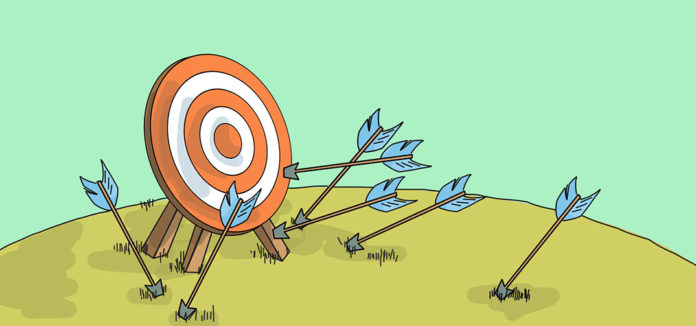

How to Overcome the “What the hell?” Effect

Does every day begin with the best intentions?

You wake up early, eat a healthy breakfast, and plan on a healthy lunch, working out after work and a light dinner. But then life happens.

Your boss tells you to start over on a project and you “stress order” a Frappuccino. Your son’s teacher leaves a message saying she has some concerns. You dig up that old packet of M&Ms hidden in your desk drawer and gobble it down. A co-worker, who also happens to be a talented pastry chef, brings in his famous cheesecake. You eat two slices. The cookie plate in the afternoon meeting calls your name. You inhale six of them. You skip your workout — “Why bother at this point?” you ask yourself — and order a cheeseburger with extra bacon for dinner. It doesn’t even taste good but you eat every bite and the French fries too.

Sound familiar?

You indulge. You feel terribly guilty. You double down.

Setting high standards for yourself is a good thing but striving to be Little Miss Perfect when it comes to eating may be sabotaging your best efforts to lose weight. Saying “what the hell?” the moment you stray from your original goal can lead to a vicious cycle of self-loathing and punishment.

According to researchers, the “what-the-hell?” effect occurs when goals are seen as short term. It is most powerful when we are trying to break a bad habit. Food is an obvious example but the what-the-hell-effect can surface in any area of life — smoking, checking email, drinking, shopping etc.

Here are 5 strategies to stop you from throwing in the towel every time you make a small mistake.

Pause and Plan

Before you tumble down that rabbit hole of self-loathing, take a moment. Put as much time as you can between the setback and doing something that is going to make you feel even worse. Write down what is going through your head, go for a walk around the block, or call a friend. The more time you take, the better decisions you will make.

See the Future

Instead of focusing on today’s mistake, consider the bigger picture. Tap into your underlying motivation. Are you trying to eat well so you can fit into that dress tomorrow night or because you care about your health and hope to live long and well?

Don’t let the chocolate chip cookie become the
elephant in the room

Studies show that simply resisting an urge can actually make it worse. Instead of fighting a craving, acknowledge it and accept it. Come up with an alternative and be flexible. Setting too many limits can backfire. Rather than fixating on the cookie you cannot have, make a plan to indulge in another way. Consider something non-food related like a massage or a night out with friends.

Forgive Yourself

Instead of beating yourself up, remind yourself that you are not the only person who has ever experienced a setback. Think of it as an opportunity to work harder and prove your commitment to your goals.

Do a Good Deed

Studies show that doing something kind for someone else can increase willpower.  For example, if you are furious with yourself for eating more than you planned to at that holiday dinner, instead of doubling down and polishing off the last slices of pumpkin pie, offer to do the dishes. You will feel a whole lot better about yourself and your host will thank you too!

I wish you all the best,

Dr. Samantha Boardman

Why You Should Live Life According to Your Values

Psychologists describe two types of motivation:

(1) internal motivation—when we do things for the love of the game, because it is personally meaningful and reflects who we are.

(2) external motivation—when we do things in order to earn an award, for recognition or because it “looks good.”

So which is better?

Researchers conducted a study of more than 11,000 cadets entering West Point and looked at the reasons each cadet joined the Academy. Some cadets said they were driven by what researchers call “intrinsic motivation.”

For example, they found value in the process of becoming a good leader in the US army. Others cited “extrinsic motives”– their parents wanted them to go to West Point or they thought it would help them get a good job down the line. Over a nine year period the researchers found that the cadets with intrinsic motives were more likely to graduate, more likely to receive early promotion and more likely to pursue a career in the military. Their conclusion: internal motives go hand in hand with meaning and success.

Studies show that people who act on intrinsic aspirations lead happier and healthier lives. Living life according to one’s values and internal motives prevents burn out, keeps setbacks in perspective and buffers against stress during periods of transition and change.

Of course there is a great deal of overlap between external and internal motivation. A best-selling author might be passionate about writing and also enjoy the fame and fortune that accompanies his success. Problems arise when external motivation eclipses internal motivation.

As we shift from a culture of character to a culture of personality, there is an increasing emphasis on external motivation. Historian Warren Susman offers the following explanation:

Whereas once we lived among people known to us and private behavior was how we were judged, urbanization meant living among strangers.

So, what matters more—to be known widely by many or loved deeply by a few? To be known for one’s achievements or to be a good person who lives life according to one’s values?

When behavior is driven primarily by success, we risk losing perspective and missing out on what truly matters. As Mihaly Csikszentmihalyi, author of Flow: The Psychology of Optimal Experience describes:

…success, like happiness, cannot be pursued; it must ensue…as the unintended side-effect of one’s personal dedication to a course greater than oneself.

Do what you do because it is meaningful and because it matters.

Happiness is when what you think, what you say, and what you do are in harmony. ~Gandhi

I wish you all the best,

Dr. Samantha Boardman
8 Tips To Help You Survive Thanksgiving

Just in time for the holidays. Here are a few tips that will help you and your family survive and enjoy this holiday season.

1. Walk off the stress and cravings

Family-induced stress can lead to cravings. Polishing off a pumpkin pie goes from tempting to irresistible after an argument with your opinionated cousin. Instead of heading for the refrigerator, go for a 15-minute walk.

2. Put your phone away

A visible phone undermines the quality of conversation. Don’t even think about putting it on the dinner table.

3. Avoid hot button topics 

Politics, money, religion, sex and health are dinner party “no-nos” for obvious reasons. These topics tend to bring out the worst in people, even typically unemotional ones. 

4. Sit at a round table

If you are concerned about conflict, you may want to consider a scientifically proven strategy for keeping the peace: use a round table. People seated at a round table – as opposed to a rectangular or square one – get along better and are less likely to bicker.

5. Beware of what you miss when you snap a pic

Snapping pictures influences what we remember. This phenomenon is called the ‘photo-taking impairment effect.’ If you are busy taking photos, you may miss the moment. 

6. Turkey tastes better when shared

Food and wine taste better when shared. We are social creatures and our wellbeing—both physical and mental—depends on our connections. Reach out to someone who may be on their own, don’t assume everyone has plans. Extend an invitation and be a bright spot in someone else’s life. 

7. Be kind

Studies show that kindness breeds kindness. It’s contagious, so pass it on. Research illustrates the numerous health benefits of being kind: increased happiness, closer relationships, greater life satisfaction, decreased stress, a stronger immune system including greater cardiovascular health, and decreased physical pain.

8. Gain time by giving it away

If the holiday season leaves you feeling pressed for time, try giving it away. Volunteering and doing things for others, rather than focusing on ourselves expands our sense of time. On that note, if you are interested in volunteering or making a charitable contribution this year, City-Meals-on-Wheels is a great organization that delivers nutritious meals to New York’s elder population.

Wishing you a Happy Thanksgiving.

“Thanksgiving, after all, is a word of action.” ~W.J. Cameron

I wish you all the best,

Dr. Samantha Boardman

Take Time for Traditions

A toast before champagne; blowing out candles and making a wish before tucking into birthday cake; ceremoniously carving a turkey or saying grace before digging into Thanksgiving dinner. Ever stop to think if there’s a reason for all this tradition steeped on tradition?

Research shows that we savor and appreciate food and drink more when a ritual precedes it. Delayed gratification, more enjoyment and a sense of deeper meaning contribute to the enhanced experience. By linking rituals to beneficial behaviors like healthy eating or exercise, those positive behaviors are more likely to be experienced as pleasurable and thus, more likely to be practiced.

My favorite traditions for the season: a long family walk after Thanksgiving dinner and delivering meals to the elderly with Citymeals-on-Wheels in the weeks between Thanksgiving and Christmas.

I wish you all the best,

Dr. Samantha Boardman

Julee Wilson

Julee Wilson Essence

The stylish and successful Fashion & Beauty Director at ESSENCE discusses pet peeves, her collection of crystals, true beauty, and what she wears to make her feel strong.

Live A Life Without Regret

A nurse who worked in palliative care listened to the final words of those on their deathbeds. She recorded their thoughts and put them in a book, The Top Five Regrets of the Dying:

1. I wish I’d had the courage to live a life true to myself, not the life others expected of me.

2. I wish I hadn’t worked so hard.

3. I wish I’d had the courage to express my feelings.

4. I wish I had stayed in touch with my friends.

5. I wish that I had let myself be happier. 

There is no mention of making more money, spending more time watching television, updating Facebook, or responding to email. All five regrets reflect a longing for more meaning and connection. Somehow the hustle and bustle of daily life got in the way of what truly mattered.

Avoid this happening to you by creating a weekly work/life check-in. Here is how Qualtric CEO Ryan Smith, master of the universe, created a weekly ritual:

Each week, I examine the categories of my life — father, husband, CEO, self — and identify the specific actions that help me feel successful and fulfilled in these capacities. This weekly ritual helps me feel like I’m doing everything in my power to address my needs and the needs of those around me. This is important because I can’t lose sight of the business agenda, and we’ve all seen or read about what it looks like when you lose sight of your family’s needs.

Think of it as a check engine light to ensure you are spending your time according to your priorities and living a life in concert with your values. Never let the things you want make you forget the things you have.

I wish you all the best,

Dr. Samantha Boardman