
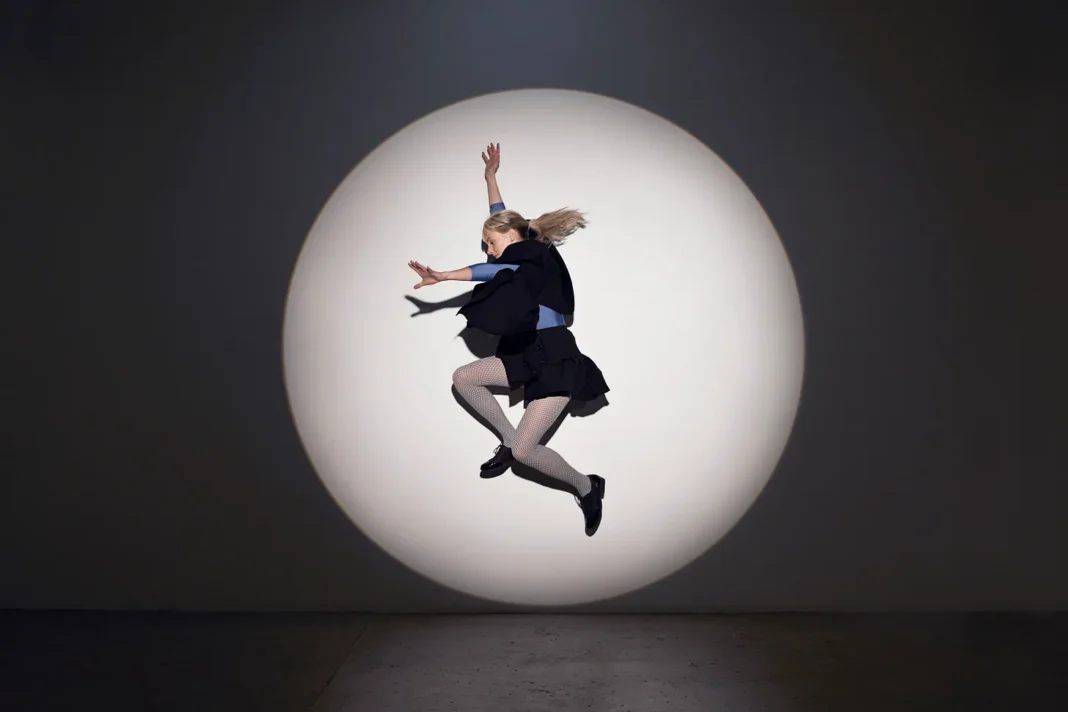
Something strange is happening at concerts and clubs: people have stopped dancing. The Wall Street Journal recently reported on this phenomenon. DJs and venue owners are baffled as crowds stand rigid, phones raised, too self-conscious to move. Even Austin Butler was recently spotted awkwardly hovering by a DJ booth at a party, too nervous to dance.

The reality is that the fear of being in the spotlight is almost entirely in your head.
The Vanilla Ice Experiment
In 2000, Cornell psychologist Thomas Gilovich ran a brilliantly simple experiment. He asked college students to wear embarrassing T-shirts–one featured Vanilla Ice and another featured Barry Manilow (apologies to fans, Vanilla Ice and Manilow were considered highly uncool at the time) and walk into a room full of observers.
Before entering, participants predicted about half the room would take note of their cringe inducing shirt.
The actual number? 23%.
They overestimated by more than double.
Gilovich called this the “spotlight effect”—our stubborn belief that we’re center stage when really, everyone else is just as worried about themselves. We tend to fixate on our own vivid experience and forget a crucial truth: they’re not watching you because they’re preoccupied with their own thoughts.
Why Social Media Made It Worse (But Not How You Think)
Social media didn’t create the spotlight effect. It amplified it. The possibility of being captured on camera transforms that imaginary spotlight into something that feels real.
Except it’s still mostly imaginary.
Yes, your friend might post a photo. But even if your awkward dance moves make it into frame, here’s what happens: almost nothing. The average Instagram post gets 3-5% engagement. That blurry shot of you? People scroll past in 1.3 seconds while thinking about their own problems.
The Science of Breaking the Spell
Here’s where it gets interesting: one person dancing changes everything.
Solomon Asch’s famous conformity studies found that when everyone stays still, people conform. But introduce just one person who breaks the pattern? Conformity drops by 80%.
You’re not just liberating yourself when you start dancing. You’re giving permission to everyone around you.
This isn’t just about fun. University of Sydney researchers found that dance is as effective—sometimes more effective—than other exercise for improving mental health. Across ages 7 to 85, dance significantly reduced depression and anxiety, boosted memory and cognition, and enhanced social connections.
People actually stick with dancing because it’s enjoyable. Try getting those adherence rates from a treadmill.
So when you stand frozen at the edge of the floor, you’re forfeiting measurable improvements to your mental health, cognitive function, and well-being. All because of an audience that doesn’t exist.
Three Moves That Work
The spotlight effect may be stubborn, but it’s not unbeatable. Decades of research point to simple ways to loosen its grip. Here are three evidence-based moves to reclaim the dance floor.
1. Cut your estimate in half. Then cut it again.
The person next to you isn’t analyzing your moves. They’re worried about their own.
2. Be the first.
Go ahead and break the seal. Five minutes later when the floor is packed, no one will remember who started it. (And if they do, they’ll think you were brave.)
3. Put your phone away.
You can’t lose yourself in the music while filming for an imaginary audience. Choose one: live it or record it.
Whatever You Do, Don’t Take Yourself Too Seriously
A brand new study found that when we commit minor social blunders such as tripping on a curb, spilling a drink, or yes, busting out an awkward dance move, that laughter makes you look better than cringing with embarrassment. Across six studies with over 3,000 participants, people who laughed at their harmless mistakes were seen as warmer, more competent, and more authentic than those who were mortified.
Embarrassment signals that you believe everyone noticed and that it matters. We already know from Gilovich’s research that people notice far less than you think. Laughter signals something different, that you recognize the mistake is trivial and that you’re not taking yourself too seriously.
So when you inevitably stumble on the dance floor, your best response isn’t to freeze or flee in mortification. Laugh. Keep moving. You’ve just combined two powerful insights: the spotlight effect means most people didn’t notice anyway, and for those few who did, your laughter just made you more likable.
The Bottom Line
Unless you’re Taylor Swift or Austin Butler, nobody cares about your dance moves. And I mean that in the most generous and liberating way possible.
You are blissfully, wonderfully forgettable to 99.9% of people around you. This isn’t an insult, think of it as freedom.
The research is clear: we overestimate attention by more than double, one person can change group behavior by 80%, and dancing delivers measurable health benefits. The only thing standing between you and the dance floor is a phantom audience that exists mostly in your head.
And here’s the thing: if you’re holding back on the dance floor, where else are you holding back? That question you didn’t ask in the meeting. The pitch you didn’t make. The conversation you didn’t start. The spotlight effect doesn’t just keep us from dancing, it keeps us from speaking up, trying new things, and taking the very risks that make life interesting. Once the imaginary spotlight dims, the real possibilities come into focus.
I wish you all the best,
Dr. Samantha Boardman