
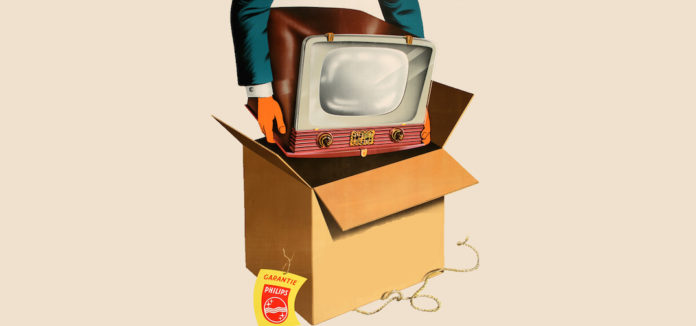
The Real Housewives Made Me Do It: How TV Influences Behavior

Television has a terrible reputation. I vividly remember my mother telling me my eyes would become square if I watched too much of it. To my knowledge, no studies link watching television with the development of square eyes yet. However, research does show that too much time in front of the television takes a toll on our health.

A study by the American Heart Association shows that adults who watch TV for three hours or more a day may double their risk of premature death.

Another study shows how television programs can have a negative influence. Shows like The Real Housewives that depict aggressive behavior like bullying and manipulation can impact real life behavior. In a study entitled Just “Harmless Entertainment”?  Effects of Surveillance Reality TV on Physical Aggression, participants were separated into three groups. One group watched Real Housewives or Jersey Shore, the second group watched an uplifting show like Little People, Big World, and the third group watched a crime drama like CSI.  After watching the shows, those who had sat through Real Housewives or Jersey Shore exhibited more aggression. As the researcher states:

This research clearly shows that these programs are not simply harmless entertainment—exposure to this verbal and relational aggression increases physical aggression.

That said, television can be a positive influence too. In India, the introduction of cable TV had social benefits.  Within months of its arrival, surveys indicate it had a major effect on attitudes about gender:

Introduction of cable television is associated with significant decreases in the reported acceptability of domestic violence towards women…as well as increases in women’s autonomy and decreases in fertility. We also find suggestive evidence that exposure to cable increases school enrollment for younger children, perhaps through increased participation of women in household decision-making.

The Indian women who watched television were also less likely to report a preference for having a son than a daughter.  Bollywood-style soap operas are thought to have been especially influential by depicting urban women working outside the home and making decisions about their lives. The theory is that by observing these sophisticated women, social norms and attitudes changed.

In America, studies have shown  how television programs can decrease prejudice.  The best example,  Will and Grace, has been credited with helping viewers get to know gay people. As the lead researcher writes:

With the emergence of the extraordinary Will and Grace show, more and more Americans, sort of from the safety of their armchair, could learn a bit about gay people who they might not otherwise have learned from in real life.

Television isn’t just entertainment, it changes attitudes too, but choose what you watch carefully.

As my favorite character, the Dowager Countess, says on Downton Abbey:

Vulgarity is no substitute for wit.

I wish you all the best,

Dr. Samantha Boardman
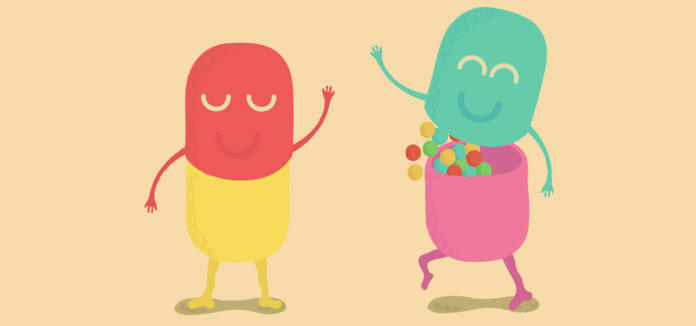
Too Cute to Resist: How Design Influences Behavior

Do cute products sell better? To explore this question, researchers measured the effect of cute, playful and whimsical products on consumption and indulgence.

Test participants ate more ice cream when they served themselves ice cream with a whimsical ice cream scoop then a plain one, an alligator shaped stapler inspired more creativity than a normal one, a playfully colored gift certificate encouraged more frivolous purchases than an unadorned one, and test participants ate more cutely decorated cookies than plain ones. The results are clear: consumers love cute stuff.

Companies are acutely aware of the power of “cute”. Indeed, we are surrounded by cute products: Marc Jacobs’ kitten shoes; iPhone covers designed to look like turtles; kitchen utensils like zebra dish scrubbers and Betty Boop rubber gloves; pens, pencils and paperclips in quirky shapes and colors; Gummi Bears; the MINI Cooper; and the mother of all cuteness, Hello Kitty.

Design influences human behavior on many levels. The researchers hope their work has application beyond peddling a product:

Even though we examined the effects of playful products on indulgence in the domains of eating, shopping, and product usage, we expect that exposure to whimsical products could have similar effects on helping people focus on having fun and rewarding themselves in other important life domains like savings, debt repayment, or time management.

Fun design has been shown to influence behavior in positive ways. In fact, Volkswagen sponsored a ‘Fun Theory’ campaign in which:

…an open invitation was extended to submit ideas that made seemingly baleful social challenges — environmental protection, speed-limit adherence, boosting public transportation ridership — enjoyable.

Examples included: The Piano Stairs next to an escalator that enticed more people to climb stairs to the tune of their steps than take the escalator; The Bottle Bank Arcade which made recycling fun; and The Playbelt which prohibited drivers from accessing in-car entertainment systems until every passenger was safely buckled in.

Bottom line: be aware of the way that products and design influence behavior. Make choices that bring out the best in you.

I wish you all the best,

Dr. Samantha Boardman
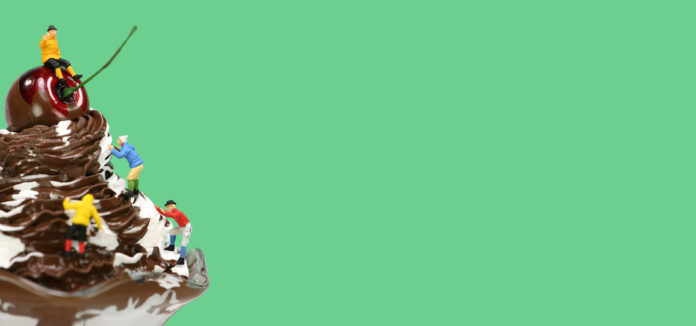
Does Size Matter?

Forget apple pie. Ice cream is America’s national dessert. Thanks to Ronald Reagan, July is National Ice Cream Month and although ice cream has competition from frozen yogurt these days, it retains its crown as the most in-demand summer treat.

In a given week, 40 percent of Americans will eat ice cream. That’s a lot. To put it in perspective, that’s nearly as large a share as will drink coffee.

If you plan on indulging this summer, please keep the following in mind: the size of the bowl you serve it in (hopefully you are not spooning it directly from the container) and the size of the scoop you use influence how much you eat. Why? Because most people eat what is in front of them. This is especially true when it comes to ice cream. Whatever the portion size—big or small—you are going to polish it off.

Consider the following: a person with tremendous self-discipline decides to eat half of a bowl of ice cream. The size of that bowl matters a great deal. Half of a large bowl versus half of a small bowl is very different indeed. Along similar lines, a small scoop of ice cream in a small bowl looks just right, but the same amount in a massive bowl appears meager. So what do you do to make it look like the “right” amount? You add an extra scoop.

Researchers call this the “size-contrast bias”. We unconsciously eat more than what we plan or want to because of it. Even experts are vulnerable. In a study, nutritionists were unaware of having served themselves 53 percent more ice cream when they were given large bowls and large scoops.

The difference is cultural as well. Portions in France and Italy are smaller than those in the United States. For example, an ice cream in Paris consists of one or two golf-ball sized scoops. In New York City, a single scoop is the size of a grapefruit.

Perhaps the most effective way to tackle super-sized servings is to change one’s environment. No, this does not mean you have to move to France. As referenced in Portion Size Me: Downsizing Our Consumption Norms:

Is education the answer? The answer is not in telling clients to remind themselves not to overeat from large packages, large servings, and large dinnerware. The answer is for them to eliminate large packages, large servings, and large dinnerware from their lives. It is much easier for a person to change his or her environment than to change his or her thinking. We first need to change our personal environment. Only then do we change our minds.

My advice: Use giant bowls and spoons to encourage fruit and vegetable consumption and serve dessert in small bowls with tiny scoops.

I wish you all the best,

Dr. Samantha Boardman
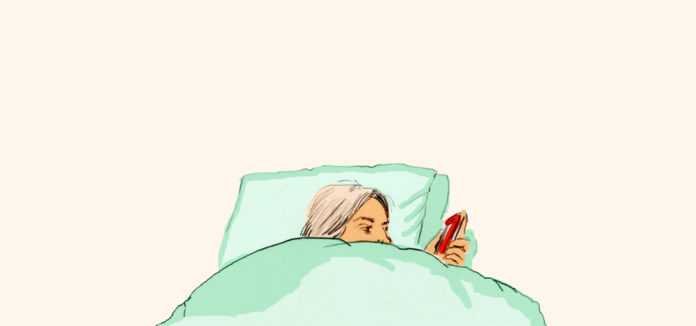
Do You Check Your Phone First Thing in the Morning?

If checking your phone is the first thing you do when you wake up, you may want to rethink your morning routine. Tristan Harris, Google’s Design Ethicist, explains:

When we wake up in the morning and turn our phone over to see a list of notifications—it frames the experience of ‘waking up in the morning’ around a menu of all the things I’ve missed since yesterday.

You are immediately thrown into catch-up mode. So much has happened since you went to bed. There are emails to respond to, messages to read, Snapchats to watch, Instagram photos to see, not to mention all the breaking news you need to stay abreast of.  Your mind and your morning are hijacked.

Email deserves a special mention. It functions as a benevolent dictator—well-intentioned but ultimately toxic. A recent British survey of 2000 people across a variety of industries found that checking email early in the morning or late at night is linked to greater stress. Not surprisingly, those who received a constant stream of email throughout the day along also reported more stress than those who did not leave their email application running.

In a related study, participants were asked to check their email frequently for one week. The following week they went on an email diet—they checked email three times a day and disabled all notifications.  Their stress levels decreased and their moods improved.

Why do we allow our daily lives to be hijacked by technology when we know (and studies show) it stresses us out. Harris cites FOMSI (Fear of Missing Something Important) as one of the main reasons:

Another way apps and websites hijack people’s minds is by inducing a “1% chance you could be missing something important.

If I convince you that I’m a channel for important information, messages, friendships, or potential sexual opportunities — it will be hard for you to turn me off, unsubscribe, or remove your account — because (aha, I win) you might miss something important.

This keeps us subscribed to newsletters even after they haven’t delivered recent benefits (“what if I miss a future announcement?”) This keeps us “friended” to people with whom we haven’t spoken in ages (“what if I miss something important from them?”) This keeps us swiping faces on dating apps, even when we haven’t even met up with anyone in a while (“what if I miss that one hot match who likes me?”)…But if we zoom into that fear, we’ll discover that it’s unbounded.

Harris concludes:

Imagine if tech companies recognized that, and helped us proactively tune our relationships with friends and businesses in terms of what we define as “time well spent” for our lives, instead of in terms of what we might miss.

How are you spending your time?

I wish you all the best,

Dr. Samantha Boardman
The Problem With Free Food at the Office

The old saying tells us that the way to a person’s heart is through their stomach. Many companies are applying this theory to win the love of their employees. As one survey of more than 1,000 full-time office workers demonstrates, on-the-job happiness jumps dramatically when free food is offered.  Providing snacks like granola, chips, cookies and candy seems like a surefire strategy to keep employees smiling and satisfied.

There can, however, be a downside to this smorgasbord of snack food. Unlimited access to unhealthy treats obviously can lead to overeating and weight gain. But the impact is so much more than that. As one 20-something who used to work at a startup in Brooklyn with an all-you-can-eat candy bar told me,

The amount of Swedish Fish I used to eat on a daily basis was obscene.

In addition to gaining weight, she describes how grazing all day on candy affected her productivity.

I would feel like the Energizer bunny and then totally crash.

The spikes in blood sugar made it hard to concentrate and took a toll on her motivation and mood.

All that sugar turned me into a monster. After eating five fistfuls of Gummi Bears my nerves were frayed. Everyone knew not to come near me.

People tend to eat food that is easy to see and easy to grab. The less effort required, the more they consume. When goodies are within arms’ reach, they are especially hard to resist. Consider the following scenario: You get up from your desk to grab a water and notice some chocolate chip cookies sitting in pretty wicker basket nearby. You weren’t even hungry but now those cookies are calling your name.

Still, before you get rid of all the high-calorie snacks in the office and risk the wrath of your employees, consider research that suggests ways to keep free food available, but in ways that help them avoid over-indulging.

A recent study, for instance, highlights the influence of proximity on snacking: When snacks were close to a beverage station, people ate more of them than when they were farther away. Even a couple of feet made a difference. In fact, research showed that the probability of snacking increased by more than half when the drink station was right next to the snack supply.

As a result, it may be as simple as adding a little distance between the drinks and the high-calorie snacks.  Put the candies and cookies in a different location, in an area that is less convenient. If you want to encourage healthy eating, place the fruit and vegetables front and center. In addition to being good for the body, these healthy snacks are also good for the mind. As one study showed, the more fruits and vegetables people consumed, the happier, more engaged, and creative they tended to be.

Google harnessed the science of behavior to design a strategy nicknamed Project M&M to combat the problem of staffers eating too many M&Ms. In staff cafeterias, they placed the M&Ms in opaque containers and placed dried fruit and nuts in clear glass containers. It was an ingenious and simple intervention. They didn’t remove the M&Ms altogether, they simply placed them out of sight. The result? Over the course of seven weeks, the 2,000 employees at their New York offices consumed 3.1 million fewer calories.

As a doctor, I witness the effect of diet on mental health first-hand. When I was training to become a psychiatrist, I rarely paid attention to what my patients ate. Unless the person had an eating disorder or depression-associated weight loss, their diet did not get much airtime. I couldn’t have cared less about how many diet sodas they drank or how much candy they ate. Little did I know back then about the relationship between diet and brain health.

These days, I grill my patients about what they eat and literally prescribe a diet rich in fruits and vegetables. I share these proximity strategies, recommending, for example, that they keep a bag of carrots or an apple within arm’s reach.  They can trick themselves out of wanting unhealthy snacks if the hassle of obtaining them is too high.

Ultimately, If they are going to grab a snack, it may as well be mood-enhancing. The only side effects are feeling and looking good.

We are creatures of our environment and this is especially true when it comes to food. Create a workplace that encourages healthy habits. Just be sure to make the healthiest options the easiest options available.

Now, please pass the crudité.

I wish you all the best,

Dr. Samantha Boardman
Do You Really Know What Other People Think About You?

“My friends and employees know me to be a humble guy,” explained my patient “John.” He was astonished to later learn that a number of these people described him as “pretty arrogant,” in a survey he commissioned as part of a behavioral assessment tool to improve performance at his company. He had a heart-to-heart with a good friend who more or less agreed with the survey’s findings. How could he have gotten it so wrong?

Most of us think we have a pretty good idea about how other people see us—how nice we are, how funny we are, how interesting we are, how attractive we are and so on. We assume that others see us as we see ourselves. Psychologists call this “egocentric bias”—when we are locked inside our own heads, we lose the ability to be objective.

To get a better view of yourself, you could hire a team to do 360 interviews as John did. Another less-expensive option is to think more abstractly. In a 2010 study, researchers split participants into two groups and asked them to judge how attractive they were to another person. One group was told to put themselves in the other person’s shoes. The other group was told to imagine how they would be rated by the other person in several months’ time. Those who tried to put themselves in the other person’s shoes did terribly—in fact, there was no association between how they thought others would rate them and how they actually did rate them. On the other hand, those who thought about their future selves did much better. Related research yielded similar findings in general evaluations, not just attractiveness.

We are blinded by how much we know. Thinking about ourselves in the future, though, moves our mind to a more abstract level, allowing us to better see ourselves through others’ eyes.

If you want to get a better picture of yourself, think forward.

I wish you all the best,

Dr. Samantha Boardman